Preparing a budget before you start your studies can help you understand your expected income and expenses, giving you greater confidence about managing your money throughout the academic year. By planning ahead, you can start your studies feeling financially prepared and focus on making the most of your time at Leeds Conservatoire.
We've brought together a range of budgeting resources and guidance below to help you plan your finances. Simply click on each section to find out more.
If you're an undergraduate student and would like to learn more about undergraduate maintenance loans, visit our Maintenance Loans for Undergraduates page.
Your living costs will vary according to your circumstances and your lifestyle expectations, but for students in year one, living away from home, the following is a guide.
Essential Items |
|
|
Rent in Joseph Stones House (single en-suite room) |
From £182 to £258 per week (most rooms are £190). Tenancy is for 43 weeks |
|
Rent in other student accommodation in Leeds |
£265 per week (for 42 weeks) |
|
Rent in shared student house |
£135 per week, not including bills (for 52 weeks) |
|
Food |
£36 per week |
|
Utilities (gas, electricity and water are included in halls, but not usually in shared houses). |
£20 on average per week (but could vary widely) |
|
Mobile phone contract |
£16 per month |
|
Daily travel to conservatoire |
Nil if within walking/cycling distance, otherwise budget for about £4 per day |
|
Travel to home once per term |
The train/coach fare - depends where you live! |
|
Miscellaneous costs (toiletries, laundry, hairdressing, clothes) |
£58 per week |
|
Course costs (stationery, memory devices, instrument maintenance, concerts/gigs) |
£5 per week average |
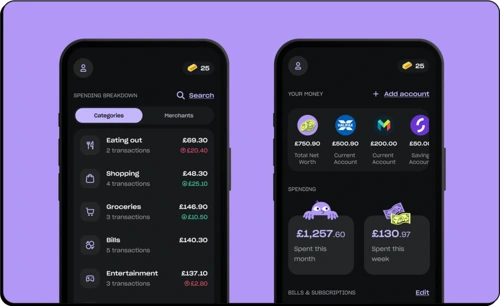
Blackbullion's Money Manager App is a free app designed to help students take control of their finances. Using open banking, it securely connects to your bank account to give you a clear overview of your money in one place. You can track your income and spending, monitor your budget, and receive personalised insights to help you make informed financial decisions throughout your studies.
Key features include:
- Secure Open Banking connection – view your bank accounts in one place through a secure, read-only connection
- Spending insights – see where your money is going with spending categories and transaction analysis
- Budget tracking – set budgets and monitor your spending to help you stay on track
- Money-saving tips – receive personalised suggestions to help you reduce unnecessary spending and build healthy financial habits
- Financial overview – get a clear picture of your income, regular outgoings and available balance, making it easier to plan ahead
- Student-focused support – designed specifically with students in mind, helping you manage your money confidently throughout university
Click here to download the Money Manager app
Print-at-home budgeting sheet
Use our simple budgeting sheet to create a paper budget plan that you can fill in at home or bring with you to the conservatoire. Add your expected income and yearly expenses by following the instructions, then see whether your budget is balanced, in surplus, or in deficit.
Download our print-at-home budgeting sheet
Digital budget calculator
Prefer to budget digitally? Download our Excel budget calculator to enter your income and expenses. It automatically calculates your totals and shows whether your budget is balanced, in surplus, or in deficit, so there's no need to do the maths yourself.
Food is one of the easiest areas to manage within your budget with a little planning. Preparing meals at home, planning your shopping in advance and taking lunch or snacks with you to campus can help you save money and reduce food waste. Even making a few simple swaps, such as choosing own-brand products or buying frozen fruit and vegetables can make a noticeable difference over the course of the year.
Here are some simple ways to keep your food costs down:
- Plan your meals for the week before you shop and make a shopping list to help avoid impulse purchases
- Set yourself a weekly food budget and keep track of what you spend
- Batch cook meals and freeze portions for busy days when you don't have time to cook
- Buy own-brand products where possible as they are often just as good as branded alternatives
- Take lunch and snacks to campus instead of buying food while you're out
- Look out for supermarket discounts on items nearing their use-by date and freeze them if it is safe to do so
- Use your leftovers to create another meal and reduce food waste.
- Share the cost of ingredients with housemates if you enjoy cooking together
Many students choose to work part-time alongside their studies to help with living costs. Before taking on paid work, it's important to consider how many hours you can realistically work alongside your course. We recommend choosing flexible employment that fits around your studies and doesn't have a negative impact on your studies.
If you're looking for a job in Leeds, the Leeds Employment Hub offers free one-to-one support with finding work, improving your CV, completing job applications and preparing for interviews. Their advisers can also help you identify training opportunities and connect you with local employers.
You can also search for part-time and temporary jobs on:
- Indeed – search for part-time, evening, weekend and temporary jobs in Leeds
- StudentJob UK – vacancies specifically aimed at students and recent graduates
- Save the Student Jobs – advice on finding work alongside your studies, plus current student job vacancies
If you're already enrolled at Leeds Conservatoire, keep an eye on student communications, as on-campus and student ambassador roles may also become available throughout the academic year.
If you're starting university for the first time, it's worth comparing student bank accounts before you enrol. Many banks offer interest-free overdrafts and other benefits designed specifically for students, but the features and eligibility criteria can vary, so take time to find the account that's right for you. Make sure you read the terms & conditions carefully before opening a bank account.
An interest-free overdraft can provide a useful financial safety net if you need it, but remember that it is borrowed money that will usually need to be repaid after you graduate or when your student account ends. Try to use your overdraft for unexpected or essential costs rather than everyday spending, and include it in your budget so you know how much you're using.
When comparing student bank accounts, it is a good idea to consider:
- The size of the interest-free overdraft and whether it increases during your course
- When the overdraft becomes repayable and what happens after you graduate
- Any fees or charges that could apply if you exceed your agreed overdraft limit
- Any additional benefits, such as cashback or discounts, but don't choose an account based on these alone
Remember, an overdraft should be treated as a backup rather than part of your regular income. If you find yourself relying on it every month or are worried about managing your money, the Student Funding team can offer free advice and support.
When choosing a student bank account, we recommend taking a look at Money Saving Expert's 'Best Student Bank Account' article. There is also a helpful student bank account comparison tool on Save The Student's 'Best Student Bank Account' page.
Whilst we do expect you to budget for your living costs before you enrol at Leeds Conservatoire, there is support available if you experience unexpected financial difficulties as a student.
- Student Funding Team appointments - we offer 1-1 appointments to students who are looking for help and support with budgeting, living costs, and Student Finance. We can also offer suggestions on how to save money, and create a budget plan with you
- Financial Assistance Fund - the Financial Assistance Fund is an emergency fund for Home (UK) undergraduate students who experience unforeseen and unexpected financial difficulties, and have no support from family, an overdraft, or a job. Applications are assessed and awards are made at the discretion of the Student Funding team, based on student need
- Leeds Conservatoire Bursary - this bursary is for eligible, Home (UK) undergraduate students whose Student Finance application has been income-assessed. Find out more about the Leeds Conservatoire Bursary on our Undergraduate Scholarships & bursaries page
We also offer:
- Free sanitary products within the conservatoire buildings
- Free hot water from the Café:Bar
- Warm spaces on Level 5, the Café:Bar (you don’t have to buy anything), the Rooftop Bar and the Library
To get in touch with the Student Funding team you can:
Email: studentfunding@leedsconservatoire.ac.uk
Telephone: 0113 222 3508 / 0113 222 3419