Find out what it's like to study at Leeds Conservatoire by coming along to one of our Open Days.
As well as talks and tours specific to the courses you're interested in, you can also chat to our staff and students.
Open Days
Our BA (Hons) Film, TV and Games Music degree is for aspiring composers, producers, and storytellers who want to shape the emotional core of film, TV, animation, and games. Designed with the screen industries in mind, this hands-on course combines composition and cutting-edge music production training with deep artistic exploration and real-world experience.
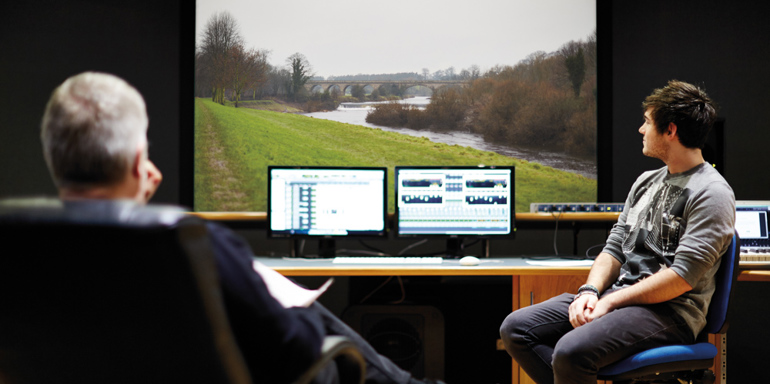
You’ll compose for real film, television, animation and gaming briefs, learning how music drives narrative, builds atmosphere and elevates storytelling. Across core modules, you’ll master orchestration, digital audio workstations (DAWs), adaptive music techniques for games, and recording with live ensembles.
Alongside your creative practice, you'll gain an understanding of music business, freelancing, and industry workflow – equipping you for a career as a professional screen composer.
From scoring across the full range of genres in Film, TV and Games, you’ll develop a diverse, industry-ready portfolio. Modules like Music for the Moving Image, Aesthetics and the Meaning of Film, and Music for Video Games help you blend theory with practice – giving your compositions the emotional depth and technical polish they need to shine.
Throughout the course, you’ll collaborate with filmmakers, animators, and game designers, and benefit from masterclasses, guest lectures, and links with production companies, festivals and gaming studios.
This is a degree for the next generation of screen composers – adaptable, original, and ready to make a mark in the UK’s booming creative industries.
You’ll gain insight and opportunity through connections with production companies, film festivals, and gaming studios. Live briefs, industry feedback, and professional collaborations will prepare you for an exciting real-world career.
You’ll create music for live film screenings, game demos, and cross-arts events, working with animators, filmmakers, and designers. Your soundtrack will become part of collaborative, professional experiences.
Access industry-standard DAWs, recording studios, live rooms and game audio software. From Logic Pro to live scoring sessions, you'll have the tools to deliver professional work from day one.
Graduates go on to careers in screen scoring, game audio, sound design, and music editing. Many build freelance or portfolio careers. Progression to MA Music (Film, TV & Games) is also available with discounted fees for our continuing students.
“The one-to-one tuition is great. You get an hour every week of feedback on your work and expert knowledge that you wouldn’t get anywhere else.” – James Jarvis, Film Music graduate
Composing for Film and TV
Credit value: 20
You’ll be introduced to the fundamentals of composing for film and television. You’ll explore different approaches to scoring Film and TV and how music interacts with visual media. Through interactive group seminars, you’ll be able to discuss your work, share opinions and ideas with your peers and explore how music shapes narrative and emotion in moving images.
This module is delivered through a combination of lectures, seminars, and principal study composition. Assessment includes a composition portfolio.
Learning and teaching hours: 30 (15%)
Directed study hours: 170 (85%)
Composing for Video Games and Library Music
Credit value: 20
You’ll build on your Semester 1 skills in composition to discover more advanced techniques in composing for library music and video games. Through collaborative workshops, you’ll have the opportunity to explore and refine your compositional voice. You’ll be able to strengthen your understanding of the emotional and narrative function of music for this specific genre of media.
This module is delivered through a combination of lectures, seminars, and principal study moving image composition. Assessment includes a composition portfolio.
Learning and teaching hours: 30 (15%)
Directed study hours: 170 (85%)
Creativity in Music for the Moving Image
Credit value: 20
You’ll establish a solid technical and creative foundation as you explore various compositional possibilities. You’ll develop confidence in how film, TV and games music is conceived and composed, the importance of understanding how emotion is generated through music, and its benefit and application to the moving image. Through seminars and collaborative study, you’ll be encouraged to share your work and discuss films and film music at length and in detail with your tutor.
This module is delivered through a combination of lectures and seminars. Assessment includes a composition portfolio and essays.
Learning and teaching hours: 30 (15%)
Directed study hours: 170 (85%)
Film and TV Music Analysis
Credit value: 20
This module builds on your understanding of composing for the moving image by bringing together your compositional skills and orchestration knowledge through an analytical approach. You’ll analyse a broader spectrum of film, TV and game scores and challenge yourself to apply your knowledge in diverse and complex scoring scenarios. This module will help you to grow confidence in your analytical skills and your abilities as a musician.
This module is delivered through a combination of lectures and seminars. Assessment includes a composition portfolio and essays.
Learning and teaching hours: 30 (15%)
Directed study hours: 170 (85%)
Producing Music for the Moving Image
Credit value: 20
On this module you’ll further develop your music production, theory and aural knowledge. You’ll deepen your understanding of digital audio workstation techniques and music theory that applies to compositional approaches for music for the moving image.
This module is delivered through a combination of lectures and workshops. Assessment includes a production and composition portfolio and a notion/theory examination.
Learning and teaching hours: 30 (15%)
Directed study hours: 170 (85%)
Production, Theory and Aural Skills
Credit value: 20
You’ll learn the foundational elements of music production, music theory and aural skills essential for composing and producing music for Film, TV, and Games. You’ll develop key practical skills in digital audio workstations (DAWs), basic editing techniques, and core music theory. Through practical workshops and theoretical lectures and seminars, you’ll develop technical proficiency and an understanding of the principles of music production.
This module is delivered through a combination of lectures and workshops. Assessment includes a practical music production task and an examination of theory and aural skills.
Learning and teaching hours: 30 (15%)
Directed study hours: 170 (85%)
Composing Music for the Moving Image
Credit value: 20
On this module, you’ll combine three key areas in composing for the moving image. You’ll combine individual exploration with collaborative sessions to establish a solid technical and creative grounding in how film music is conceived and composed. You’ll discuss various compositional possibilities, share your work and discuss films and film music at length with your peers.
This module is delivered through a combination of large and small group sessions and individualised sessions. Assessment includes a portfolio of music for the moving image and a portfolio of library music.
Learning and teaching hours: 35 (17.5%)
Directed study hours: 160 (82.5%)
Music Production for the Moving Image
Credit value: 20
You’ll explore the essential music production knowledge needed to understand recorded music and the sonic manipulation needed to bring authenticity and professionalism to music for moving image. Through combining theories and practicalities of music production, you’ll develop a rounded understanding of the craft of music production.
This module is delivered through a combination of practical workshops and seminars. Assessment includes a portfolio of music and a piece of notated score.
Learning and teaching hours: 20 (10%)
Directed study hours: 180 (90%)
Understanding Film Narratives
Credit value: 20
On this module, you’ll deepen your understanding of the relationship between film and music and how music is used as part of the narrative process. You’ll learn the importance of the film script, thematic content and how to interpret narrative function in film, television and video games. You’ll look at creative and practical applications of film, both historically and currently.
This module is delivered through a combination of lectures and seminars. Assessment includes a portfolio of an essay and a 5-minute supportive vlog.
Learning and teaching hours: 30 (15%)
Directed study hours: 170 (85%)
Film Music Production in Context
On this module, you’ll focus on the important of mixing in music production for film, television and video games. You’ll work with relevant applications and software such as Logic, EastWest, Kontakt, Spitfire and Reason. You’ll develop the confidence to explore the functionality and operation of DAW software in music production.
This module is delivered through practical workshops. Assessment includes a mixing task.
Learning and teaching hours: 20 (10%)
Directed study hours: 180 (90%)
Industry in Context
This module helps you to develop your knowledge and understanding of the film music industry. You’ll delve into the creative, artistic and commercial context behind music for film, television and video games. You’ll also examine key working practices and patterns within the industry, which will help to enhance versatile skills essential for a career in music for moving image.
This module is delivered through a combination of lectures and seminars. Assessment includes an essay submission.
Learning and teaching hours: 30 (15%)
Directed study hours: 170 (85%)
Music for Visual Storytelling
You’ll discover how music plays an important role in visual storytelling, with weekly sessions exploring the art and craft of film scoring, looking deeper into the different aspects, such as composition, orchestration and how to illicit emotion in music in context of narrative films. Through a combination of seminars and lectures, you’ll develop confidence in discussing your work as well as films and film music at length.
This module is delivered through a combination of lectures, seminars, and 1-1 sessions. Assessment includes a portfolio of music for the moving image and a piece of notated score.
Learning and teaching hours: 35 (17.5%)
Directed study hours: 165 (82.5%)
Composing, Arranging and Orchestration
Credit value: 20
Continuing from study at level 4, this module will help you to foster a greater awareness of the professionalism expected from a composer working in an ‘industry’ context as a composer, arranger ad orchestrator. You’ll learn new skills and understanding of how film music functions and is used to communicate context and meaning.
This module is delivered through a combination of lectures, seminars, and 1-1 sessions. Assessment includes a portfolio of music for the moving image and a piece of notated score.
Learning and teaching hours: 35 (17.5%)
Directed study hours: 165 (82.5%)
Orchestration in the DAW
Credit value: 20
You’ll develop confidence in managing and manipulating sequencing software and sample libraries within the context of music production. You’ll acquire a high level of knowledge and understanding of how to compose and mix music in a moving image environment. You’ll use music production software and learn how to produce realistic and authentic-sounding film music.
This module is delivered through a combination of workshops and seminars. Assessment includes a portfolio of music.
Learning and teaching hours: 20 (10%)
Directed study hours: 180 (90%)
Understanding Aesthetics and Meaning in Film
Credit value: 20
You’ll dive into the aesthetics and meaning in film, understanding what films are, the function and role they fulfil and how and why music is used and how it affects the commercial and artistic merit of film. You’ll discover how movies are essential in documenting the world we live in and how they’re used to make sense of our surroundings and lives.
This module is delivered through a combination of lectures and seminars. Assessment includes a research portfolio.
Learning and teaching hours: 20 (10%)
Directed study hours: 180 (90%)
Advanced Aesthetics and Meaning in Film
Credit value: 20
On this module, you’ll develop your knowledge of global cinema and its evolving role in Western culture and media. You’ll analyse foreign language films and television, commercial films, art films and documentaries. You’ll examine music’s crucial role in global cinema and how music be used to enhance film meaning and experience.
This module is delivered through a combination of lectures and seminars. Assessment includes a research portfolio.
Learning and teaching hours: 30 (15%)
Directed study hours: 170 (85%)
Advanced DAW Production and Synthesis
Credit value: 20
You’ll learn how to apply various music production software when composing music for film. You’ll develop confidence in how to operate, manage sequencing, sampling and synthesis performance applications relevant to music production for moving film.
This module is delivered through a combination of workshops and seminars. Assessment includes a film music composition and a piece of Library music with notation.
Learning and teaching hours: 20 (10%)
Directed study hours: 180 (90%)
Composing, Arranging, Orchestration and Transcription
Credit value: 20
This module builds on your knowledge of composing, arranging and orchestration for the moving image. You’ll discover ideas relating to composition, harmony, orchestration, and a greater awareness of transcription and score preparation. This module will help to building confidence in analysing a broad range of traditional and contemporary techniques and approaches to film music.
This module is delivered through a combination of lectures, seminars, and 1-1 sessions. Assessment includes a portfolio of music for the moving image and a piece of notated score.
Learning and teaching hours: 35 (17.5%)
Directed study hours: 165 (82.5%)
Research Studies
Credit value: 40
This module will allow you to specialise and delve deeper into a music-related area of your choice. You’ll have the freedom to explore a piece of written work to accompany the practical element of this assignment. You’ll develop key analytical and research skills needed to critically evaluate your chosen topic.
This module is delivered through seminars. Assessment includes a reflective essay and a portfolio of music.
Learning and teaching hours: 40 (10%)
Directed study hours: 360 (90%)
Film and Film Music Composition and Analysis
Credit value: 20
Building on knowledge developed at level 5, you’ll be able to develop a significant awareness of your compositional identity and how this related to existing styles and contexts in the film music industry. You’ll be able to refine and enhance your understanding of the creative techniques employed in film music composition.
This module is delivered through a combination of lectures, seminars, and 1-1- sessions. Assessment includes a piece of music composed to film and a reflective essay.
Learning and teaching hours: 20 (10%)
Directed study hours: 180 (90%)
Music for Video Games
Credit value: 20
You’ll discover the craft, techniques and concepts used in creating music for video games. You’ll learn how to analyse video game music and how practical elements, such as composition, can add to the narrative function of video game music.
This module is delivered through a combination of workshops and seminars. Assessment includes Video Games composition.
Learning and teaching hours: 20 (10%)
Directed study hours: 180 (90%)
Advanced Film and Film Music Composition and Analysis
Credit value: 20
This module will prepare you with the industry-standard skills and knowledge essential for today’s film composer. You’ll be able to master your craft as you refine your understanding of film music composition. Through 1-1 sessions, lectures and seminars, you’ll develop a highly advanced awareness of film music composition and how this translates in the industry.
This module is delivered through a combination of lectures, seminars, and 1-1 sessions. Assessment includes a piece of music composed to film and a piece of notated score.
Learning and teaching hours: 35 (17.5%)
Directed study hours: 165 (82.5%)
Advanced Music for Video Games
Credit value: 20
On this module, you’ll develop an in-depth understanding of complex techniques used in video game music to progress narrative and give context. You’ll develop confidence in how to compose for this genre as you analyse examples and examine compositional techniques frequently used in this industry.
This module is delivered through practical workshops. Assessment includes a piece of music composed to video games.
Learning and teaching hours: 30 (15%)
Directed study hours: 170 (85%)
If you know that conservatoire study is for you, but you don’t think that you’ll meet the academic or musical entry requirements, our four-year courses are an excellent opportunity to start studying your degree while you focus on your musical development.
An extra year of access to our creative and collaborative environment, excellent facilities, expert staff and rich performance opportunities will build your confidence as a conservatoire musician.
See 'Foundation Year (L3)' tab above to see what you'll study in your Foundation Year.
Find out more about BA (Hons) with Foundation Year.
96 UCAS tariff points from level 3 studies or equivalent, which normally include A Level Music or a BTEC Extended Diploma in a Music-related subject.
A minimum of three GCSEs including English Language at Grade C / Grade 4 or above or equivalent international qualification, eg IELTS 6.0 (5.5 in each component).
64 UCAS tariff points from level 3 studies or equivalent, which normally include A Level Music or a BTEC Extended Diploma in a Music-related subject.
A minimum of three GCSEs including English Language at Grade C / Grade 4 or above or equivalent international qualification, eg IELTS 6.0 (5.5 in each component).
Read our full entry requirements to see more detail on musical performance and theory standards.
Apply via: UCAS Undergraduate (not Conservatoires)
All applicants will be invited to submit a portfolio of material for assessment. You will then be invited to a short interview with our Film Music team.
Exact requirements vary depending on which programme you are applying for.
Find more detailed audition information for applicants.
Leeds Conservatoire does not charge audition fees for any Undergraduate or Postgraduate course.
For detailed information regarding tuition fees, payment options, and financial support:
If you are an international applicant, visit our dedicated International section of the website for information on:
Course Type: Undergraduate, Single Honours
Study Mode: Full Time
Apply via: UCAS Undergraduate (not Conservatoires)
UCAS Institution Code: L30
Validated by: University of Hull
Leeds Conservatoire plans to apply to the Office for Students for Degree Awarding Powers. If we are granted Degree Awarding Powers, your degree may be awarded by Leeds Conservatoire rather than validated by the University of Hull.
Course Type: Undergraduate, Single Honours
Duration: 3 years
UCAS Course Code: W3W3
Course Type: Undergraduate, Single Honours
Duration: 4 years
UCAS Course Code: W3W3
If you are looking to transfer to Leeds Conservatoire for Year 2 or Year 3, you will be enrolling on to our BA Music (Film, TV & Games Music) course which has different module specifications to our new BA Film, TV & Games Music course.
For relevant modules, please refer to our Module Specifications page.
"It’s great to have the opportunity to talk to composers in the industry, some of which are ex-students. Having them review and critique your music to film is incredibly helpful, and extra nice when they really like what you’ve done."
-Isabella BA Film, TV & Games Music

Course Studied: BA (Hons) Music (Production)
Year of Graduation: 2013
One of Dan Suett’s many achievements since leaving Leeds Conservatoire was winning composer Hans Zimmer’s Bleeding Fingers competition, which let to him gaining a position as Staff Composer at the Bleeding Fingers studios in Santa Monica, USA.
Meet our alumni
Courses taught: BA (Hons) Music (Film Music)
Read more
Courses Taught: BA (Hons) Music (Film Music)
Read more
Courses taught: BA (Hons) Music (Film Music)
Read moreOur Film Music students can audition to join any of the conservatoire’s ensembles, as well as getting the chance to showcase their work to a panel of film music composers, such as Harry Escott, Nicholas Dodd and David Julyan, each term.
Find out moreLeeds Conservatoire Film Music lecturer, Brian Morrell, teaches students about harmonic tropes.
Writing music for the moving image has become an increasingly attractive career option. Refine your composition, arranging and production skills and develop an entrepreneurial approach to working in the film music industry.
Our six Apple Mac Labs are equipped with over 100 high-specification iMacs, MIDI keyboards and audio interfaces, as well as industry standard software such as Logic Pro, Pro Tools and Ableton. They can be booked at any time outside of lessons until late.
Find out moreFind out what it's like to study at Leeds Conservatoire by coming along to one of our Open Days.
As well as talks and tours specific to the courses you're interested in, you can also chat to our staff and students.
Open DaysFind out what it's like to study at Leeds Conservatoire by coming along to one of our Open Days.
As well as talks and tours specific to the courses you're interested in, you can also chat to our staff and students.
Open Days
The Cue Tube's library of un-scored clips, and associated audio assets such as separate dialogue and effects tracks, is an invaluable resource for aspiring composers and sound designers and is fully accessible to Leeds Conservatoire students.
The library covers a wide range of genres including animation, corporate ads, thrillers, live action, drama and comedy. The materials in the library are fully-licensed for re-scoring and use in coursework and student portfolios. In addition The Cue Tube is a truly global creative community and offers further opportunities such as competitions, masterclasses and is now in the process of developing in-house film productions for the library.

Jazz at Leeds Conservatoire scooped the coveted education prize in the 2026 Parliamentary Jazz Awards. The Jazz department, plus former student Olivia Cuttill, received accolades at the ceremony at World Heart Beat in London.
Find out more
A staff member and recent graduate from the conservatoire's Music Production course have created a score for a pioneering project led by Northern Ballet in partnership with Leeds Hospitals Charity.
Find out more
Olivia Burton-Laws, a passionate deaf performer who trained at Leeds Conservatoire, is making her professional debut at York Theatre Royal in Margaret Atwood’s The Penelopiad.
Find out more